You Can Eat Less Than You Used To
Nourish · Nutrient Density
By Paul & Ann
Somewhere in your forties or fifties, the plate you used to finish starts to feel like more food than your body wants. The amount of fuel you need did come down. The amount of nutrition you need did not, and in a few places it went up.
The sentence nobody answers
We hear a version of this often enough that it has a shape of its own. A woman in her fifties says she is eating less than she has eaten in her life, cooking more carefully than she ever did, and still putting on a pound a month. When she says it out loud, somebody tells her to eat less. She was already eating less.
Then the talk turns to her weight. Few people ask what happens to the nutrients her body still needs when her portions stay smaller for twenty or thirty years.
What actually went down
The fuel requirement is real and it has been measured. A four-year study published in 2008 followed 156 healthy women through the menopausal transition with annual measurements. Fifty-one of them became postmenopausal over those four years, and in that group sleeping energy expenditure fell about one and a half times further than it did in the women who stayed premenopausal — a drop of 7.9 percent against 5.3 percent. Abdominal fat rose in everyone. Visceral fat rose only in the women who had crossed over.
The federal calorie estimates follow the same curve. In the 2015–2020 Dietary Guidelines table, a sedentary woman between 46 and 50 is estimated to need about 1,800 calories a day. At 51 that estimate drops to 1,600. A moderately active woman goes from 2,000 to 1,800. Roughly two hundred calories a day leave the budget, and nobody sends a notice.
So the experience is accurate. Your body is running on less, and it noticed before you did.
What stayed exactly where it was
Calcium goes up at 51, from 1,000 milligrams a day to 1,200, as a margin for the faster bone loss that follows the transition, and it counts on vitamin D being in place. Vitamin D rises again after 70. Protein, vitamin B12, magnesium, potassium and fiber hold steady for the rest of your life.
Only one requirement genuinely falls. Iron drops from 18 milligrams a day to 8 once monthly losses stop. One nutrient out of the whole list.
Absorption moves against you at the same time. The B12 requirement stays at 2.4 micrograms a day, while the stomach's ability to free B12 from food declines with age, and several common medications reduce it further. Check your B12 every two to three years. It is an inexpensive blood test, and a low result explains more fatigue than most people expect.
Protein is where the shortfall shows up first. Federal guidance puts older adults at five to six and a half ounce-equivalents of protein food a day; the average intake in that age group is about four and a half. Among people 71 and older, roughly half of women are not getting enough. That shortfall arrives in a body that is already losing muscle, and muscle is where the calorie line gets set in the first place.
The same nutrition out of less food
Put those two columns side by side and the task is clear. Fewer calories to spend, the same nutrients to buy, and decades left to buy them. Every bite now has to carry more than it carried at thirty-five.
Eating smaller portions of the same food takes the nutrition down along with the calories, which is why the usual advice lands so badly on a woman who has already tried it. The room has to come from changing what goes on the plate.
Where the density actually is
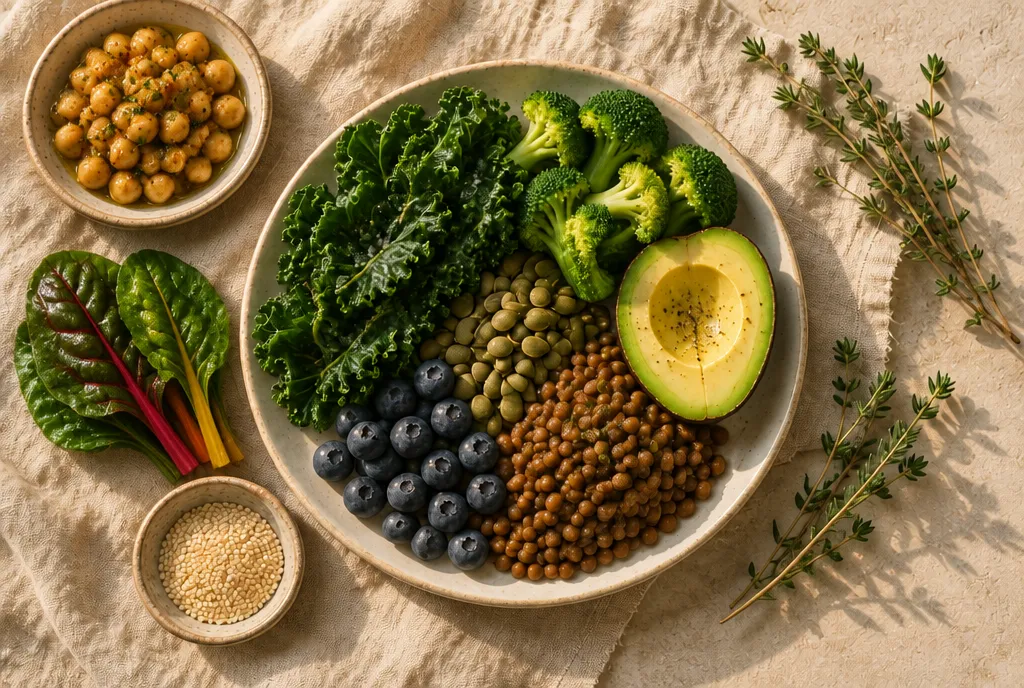
Dark leafy greens are the clearest example in the whole food supply. Kale, collards, spinach, chard and the beet tops most people throw away carry calcium, magnesium, potassium, folate and vitamin K at almost no caloric cost. A woman who finds a way to eat greens twice a day has solved a large part of this quietly.
Beans and lentils carry protein, fiber, magnesium and potassium in the same bite, which is four of the five requirements that never drop, and the fiber keeps you full while they do it. Seeds — pumpkin, sesame, sunflower, ground flax — carry minerals in a form that travels easily in a handful.
Fresh vegetable juice works on a separate principle. Juicing removes the fiber so the nutrients reach the bloodstream quickly, while the whole foods and fiber you eat through the rest of the day carry waste out. A body with less room on the plate needs both.
God designed the body to run on food, and it still runs on food at fifty-five. A smaller appetite means each meal needs to bring more nutrition.
The two things that give room back
The first is muscle. Resistance work two or three times a week — bands, weights, your own body weight, whatever you will actually keep doing — holds the lean tissue that burns the calories you are suddenly short of. Everything else here works around the smaller calorie budget. This is the one thing that raises it.
The second is absorption. You can eat well and still come up short if stomach acid is low, if a medication is interfering, or if the gut is irritated. Eating slowly and chewing properly are small things that help your body take in what you eat. If you have eaten carefully for a year and still feel the way you felt at the start, that is worth taking to a nutritionally minded health care professional and having looked at properly.
Where supplements sit
They sit after the food, as tools. A supplement is useful for a gap you have identified — B12 that is low on a test, vitamin D in a northern winter, a mineral your diet genuinely does not reach. It is not useful as a substitute for a plate that has gone thin, and no capsule has ever carried what a bunch of greens carries. Food first, every time, with supplements filling what food in your actual life cannot.
What to do with this
You can eat less than you used to. That part is settled, and it is no failure of discipline. So the question to carry into this week's groceries is a plain one: of the food that still fits, how much of it is doing something for you?
Educational content. This article is offered for education and is not medical advice. Nutritional needs vary from person to person, and nothing here is intended to diagnose or treat any condition.
We offer these teachings freely to support clarity, stewardship, and responsible care. If this article was helpful, you may explore additional resources here:
MyHDiet.com — plant-based nutrition, enzymes, detox foundations
WipeOutToxins.com — toxin-free living and prevention
CleanseYourBlood.com — circulation and blood-flow support
HealthRetreat.com — Hallelujah Diet Health Retreat
AMPMForHealth.com — everyday wellness rhythms and curated tools
Thank you for being part of a community committed to thoughtful, responsible care.
References
Lovejoy JC, Champagne CM, de Jonge L, et al. Increased visceral fat and decreased energy expenditure during the menopausal transition. International Journal of Obesity, 2008.
Estimated Calorie Needs per Day, by Age, Sex, and Physical Activity Level. Appendix 2, Dietary Guidelines for Americans, 2015–2020.
The changing nutritional needs of older adults and how to meet them. American Heart Association News, December 2024.
Dietary Reference Intakes for women, by life stage — calcium, vitamin D, B12, iron, magnesium, potassium and fiber.
